
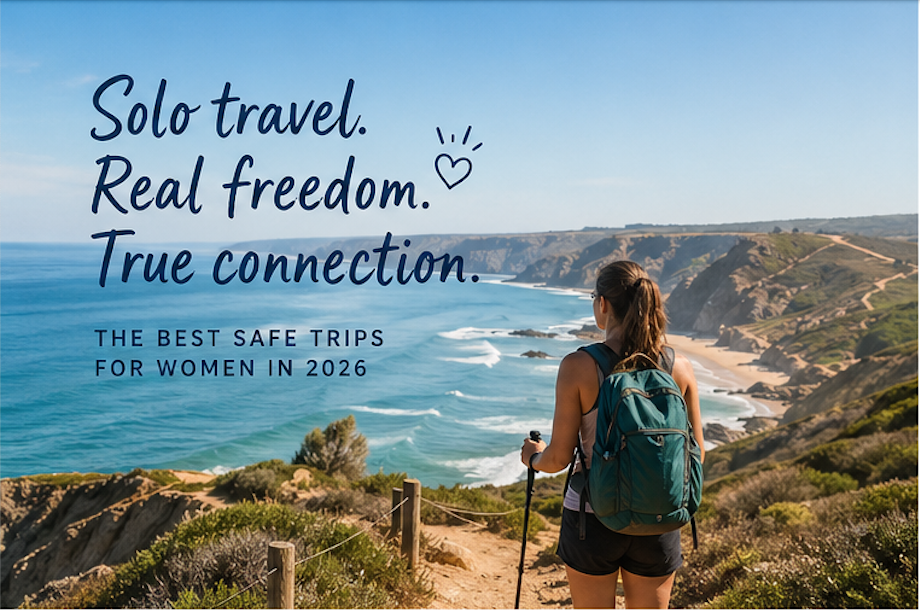
In 2026, more women than ever are choosing to travel by themselves, following their own lead, and not just to big cities or luxury resorts. The real trend? Nature-based trips to enjoy outdoors while meeting new people with the same interests. The tendency is normal if you think about coastal hikes, mountain trails, and slow travel through rural landscapes. Why the shift? It comes down to freedom, safety, and connection.
Traveling alone in nature offers a unique sense of control over your pace, your plans, and your personal space. There’s no pressure to follow a packed itinerary or compromise on what you want to do. Furthermore, by relying solely on yourself, you rediscover hidden skills that help you manage situations, both good and bad, that you never thought you could handle. Likewise, the social aspect is very important, since when traveling alone, you have no other option but to socialize. At the same time, many destinations across Europe have invested heavily in safe, well-marked trails, eco-tourism infrastructure, and community-based tourism—making it easier and safer for women to explore independently.
Practical safety tips for single female travelers
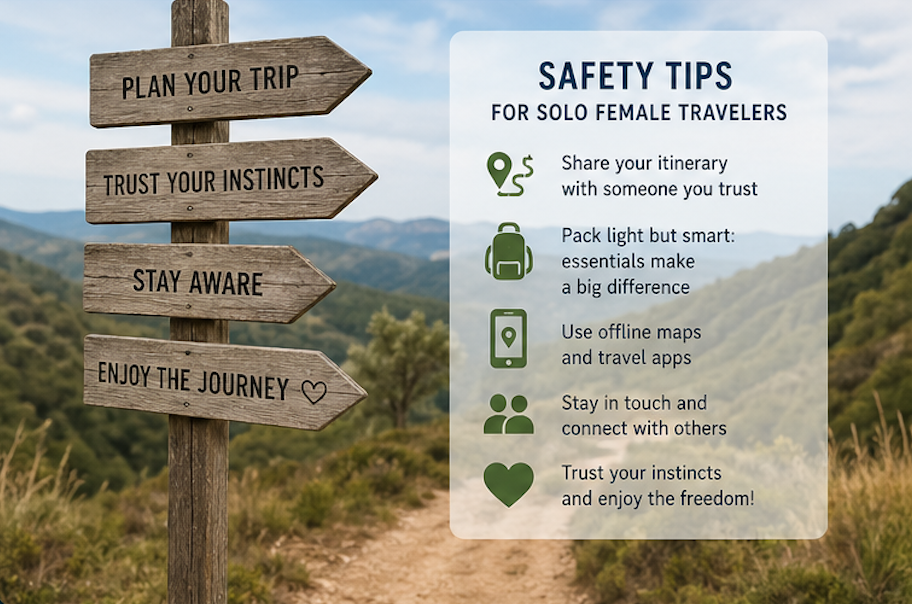
Before diving into routes, let’s get real: safety for women in a trip matters. The good news is that with a bit of planning, solo travel can be both empowering and secure.
- Choose well-established routes
Opt for trails and destinations known for solid tourism infrastructure. Clearly marked paths, frequent accommodations, and access to local services can make a huge difference, especially if it’s your first solo trip female. Well-known routes often have updated signage, emergency contacts, and even luggage transfer services, which reduce stress and allow you to focus on enjoying the experience. Doing a bit of research beforehand—like reading recent reviews or checking official route websites—can help you avoid unpleasant surprises.
- Share your itinerary
Always let someone know where you’re going and keep them updated. It may sound basic, but it’s one of the most effective safety habits. Share your daily route, accommodation details, and expected arrival times with a friend or family member. You can even use live location apps for extra peace of mind. This way, someone always knows where you are, even if you’re exploring remote areas.
- Travel light but smart
Packing light doesn’t mean leaving essentials behind. The key is to be strategic: bring a portable charger, download offline maps, and carry a compact first-aid kit. A reusable water bottle, snacks, and a lightweight rain jacket can also make a big difference. The lighter your backpack, the more comfortable and flexible your journey will be.
- Trust your instincts
Your intuition is one of your best tools. If a place, person, or situation doesn’t feel right, don’t hesitate to change your plans. Solo travel gives you full control, so use that freedom to prioritize your safety and comfort at all times.
- Connect with other travelers
Even when traveling solo, you’re rarely truly alone. Many popular routes have a strong sense of community among hikers. Whether it’s sharing a meal, exchanging tips, or simply walking alongside someone for a while, these connections can make your journey safer and more enjoyable without taking away your independence.
The best safe routes for single women in Europe
Europe is packed with incredible options for solo female travelers, especially if you’re into nature. Here are some of the best routes that combine safety, beauty, and accessibility.
1. Trilho dos Pescadores and Rota Vicentina (Portugal)
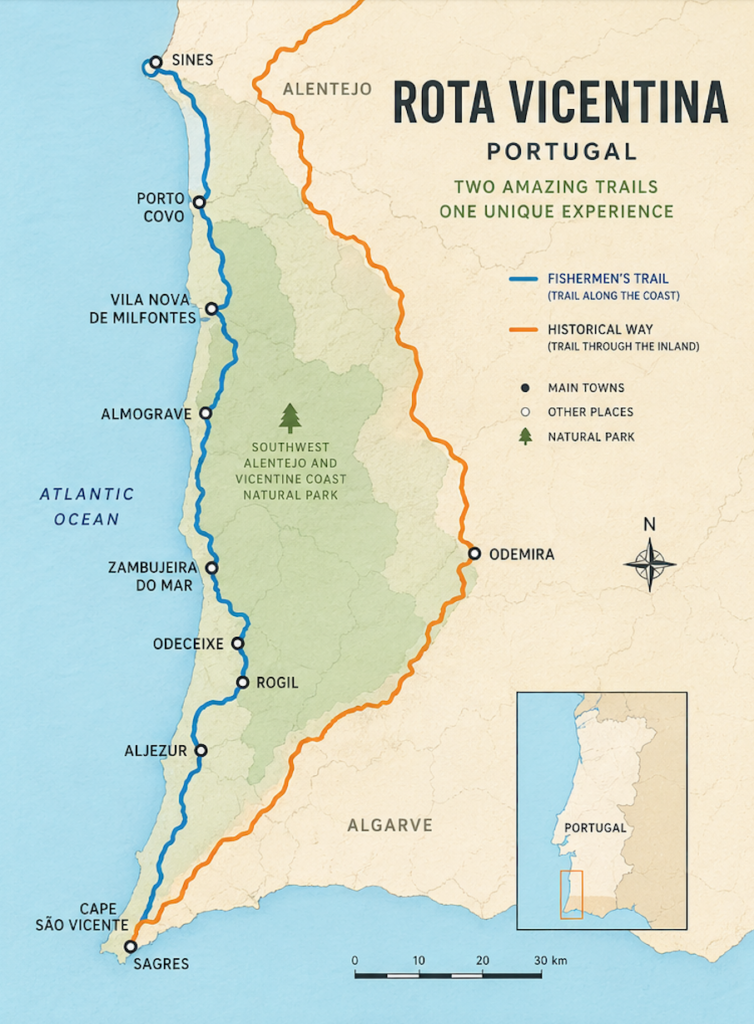
If there’s one route that perfectly captures the spirit of safe solo travel, it’s the Rota Vicentina in southern Portugal.
This network of trails runs along the stunning Alentejo and Algarve coastline, offering dramatic cliffs, quiet beaches, and charming villages. What makes it ideal for women traveling alone?
- Well-marked trails: You won’t get lost easily, even if you’re new to hiking.
- Friendly local communities: Portuguese hospitality is a big plus, especially in small villages along the route.
- Flexible stages: You can walk as much or as little as you want, adapting the trip to your comfort level.
- Safe environment: Portugal consistently ranks as one of the safest countries in Europe.
Whether you choose the Fishermen’s Trail for ocean views or the Historical Way for a more rural vibe, the Rota Vicentina offers a perfect balance of solitude and security.
2. Camino de Santiago (Spain)
The Camino is a classic—and for good reason. Thousands of travelers walk it every year, including many solo women. It’s a great option if you want a mix of introspection and social interaction.
- Strong community feel: You’ll meet people from all over the world.
- Frequent accommodations: Hostels and guesthouses are easy to find.
- Clear signage: The famous yellow arrows guide you every step of the way.
3. Cinque Terre Trails (Italy)
For something shorter but equally stunning, the trails connecting the five villages of Cinque Terre are perfect.
- Short distances: Ideal if you’re not into long hikes.
- High tourist presence: You’re rarely alone, which adds a sense of safety.
- Easy logistics: Trains connect all villages, so you can adjust your plans anytime.
4. The Wicklow Way (Ireland)
Ireland’s landscapes feel straight out of a movie, and the Wicklow Way is one of the safest ways to experience them.
- Peaceful countryside: Rolling hills, forests, and lakes.
- Low crime rates: Ireland is known for being welcoming and safe.
- Cozy accommodations: Think B&Bs with a personal touch.
Why these trips are ideal for solo women
What all these routes have in common is a balance between independence and support, so they are great for the first solo trip female. You get the freedom to explore at your own pace, but you’re never too far from help, accommodation, or fellow travelers. That combination is exactly what makes them so appealing for solo female travelers—there’s adventure, but without unnecessary risk.
They also offer something deeper than just sightseeing. Walking through nature, especially alone, creates space for reflection and personal growth. It’s not just about the destination—it’s about how you feel along the way. The rhythm of walking, the sound of the sea or the wind in the trees, and the absence of daily distractions help you reconnect with yourself in a way that’s hard to achieve in everyday life.
Another key advantage is the confidence boost these trips provide. Each small challenge—finding your route, completing a stage, navigating a new place—builds a sense of independence and self-trust. By the end of the journey, many women return home not just with photos, but with a renewed mindset, feeling stronger, calmer, and more capable than before.
Rediscover yourself as solo female traveler
Traveling solo as a woman in 2026 isn’t just a trend—it’s a movement. More and more of us are choosing to step خارج our routines, not to escape life, but to reconnect with it on our own terms. Nature-based trips are leading the way because they offer something deeply needed: simplicity, safety, and a real sense of connection—with the environment and with ourselves.
For many women, traveling alone is also about reclaiming space and confidence. It’s about proving to yourself that you can navigate unfamiliar places, make decisions independently, and fully enjoy your own company without compromise. There’s a quiet empowerment in waking up somewhere new and realizing that every choice you make that day is entirely yours.
Now that you know the best places to travel solo female, it’s time to pack your bag, listen to your intuition, and take that first step. And if you decide to venture to the paradise of Portugal, also known as the Alentejo coast, at Opa Hostel we will be happy to help you with whatever you need. But wherever you go, remember you might come back with more than memories—you might come back with a stronger version of yourself.
FAQs: Solo female travel in nature (2026 guide)
Is it safe for women to travel alone on hiking routes in Europe?
Yes, many routes are considered very safe, especially well-established ones like the Rota Vicentina or the Camino de Santiago. These trails are clearly marked, have regular accommodations, and a steady flow of travelers, which adds an extra layer of security.
What are the safest countries in Europe for solo female travelers?
Countries like Portugal, Spain, and Ireland are often ranked among the safest due to low crime rates, friendly locals, and strong tourism infrastructure.
Do I need experience to do these routes alone?
Not necessarily. Many routes are beginner-friendly and allow you to adapt distances and stages to your level. Planning ahead and choosing shorter sections is a smart way to start.
How do I stay connected during remote hikes?
Download offline maps and consider using eSIMs or local data plans. Opa Hostel Milfontes usually recommends the app Maps.me, because it works offline and it shows many trails. Remember that many routes still pass through villages with Wi-Fi and mobile coverage.
What should I pack for a single women to travel?
Focus on essentials: comfortable shoes, a light backpack, water, snacks, a power bank, and a basic first-aid kit. Packing light improves both safety and comfort.