

Hello, traveler! If you’re looking for a unique nature experience, the Vicentina Route is an option you can’t miss. This coastal trail in Portugal combines breathtaking scenery, picturesque villages, and a perfect challenge for hikers. In 12 days and 226.5 kilometers, it will take you from Porto Covo to Lagos. Get your boots ready, the adventure is about to begin!
- What is the Vicentina Route?
- Day 1: Porto Covo – Vila Nova de Milfontes (20 km)
- Day 2: Vila Nova de Milfontes – Almograve (15 km)
- Day 3: Almograve – Zambujeira do Mar (22 km)
- Day 4: Zambujeira do Mar – Odeceixe (18 km)
- Day 5: Odeceixe – Aljezur (19 km)
- Day 6: Aljezur – Arrifana (17 km)
- Day 7: Arrifana – Carrapateira (20 km)
- Day 8: Carrapateira – Vila do Bispo (22 km)
- Day 9: Vila do Bispo – Sagres (14 km)
- Day 10: Sagres – Salema (20 km)
- Day 11: Salema – Luz (18 km)
- Day 12: Luz – Lagos (13 km)
- How to do the Vicentina Route in 10 days or less
- Practical tips for the Vicentine Route
- Let's Walk!
What is the Vicentina Route?
The Vicentina Route is a network of trails that traverse southwestern Portugal, through the Southwest Alentejo and Vicentina Coast Natural Park. This route combines two main paths: the “Historical Path,” which passes through villages and rural areas, and the “Fishermen’s Path,” which follows the coast with spectacular views of the Atlantic.
In this article, we propose a popular 13-stage itinerary that alternates between both paths, offering a varied and comprehensive experience, along with tips for enjoying the Vicentina Route.
Day 1: Porto Covo – Vila Nova de Milfontes (20 km)
The adventure begins in Porto Covo, a picture-postcard village with whitewashed houses, blue facades, and a tranquil atmosphere. During the hike, you’ll enjoy ocean views, pristine beaches like Ilha do Pessegueiro, and stretches of sand that will test your legs.
The day ends in Vila Nova de Milfontes, located at the mouth of the Mira River. It’s a perfect place to relax, stroll through the old town, or enjoy the sunset. Opa Hostel is an excellent choice for its welcoming atmosphere and river views.
Day 2: Vila Nova de Milfontes – Almograve (15 km)
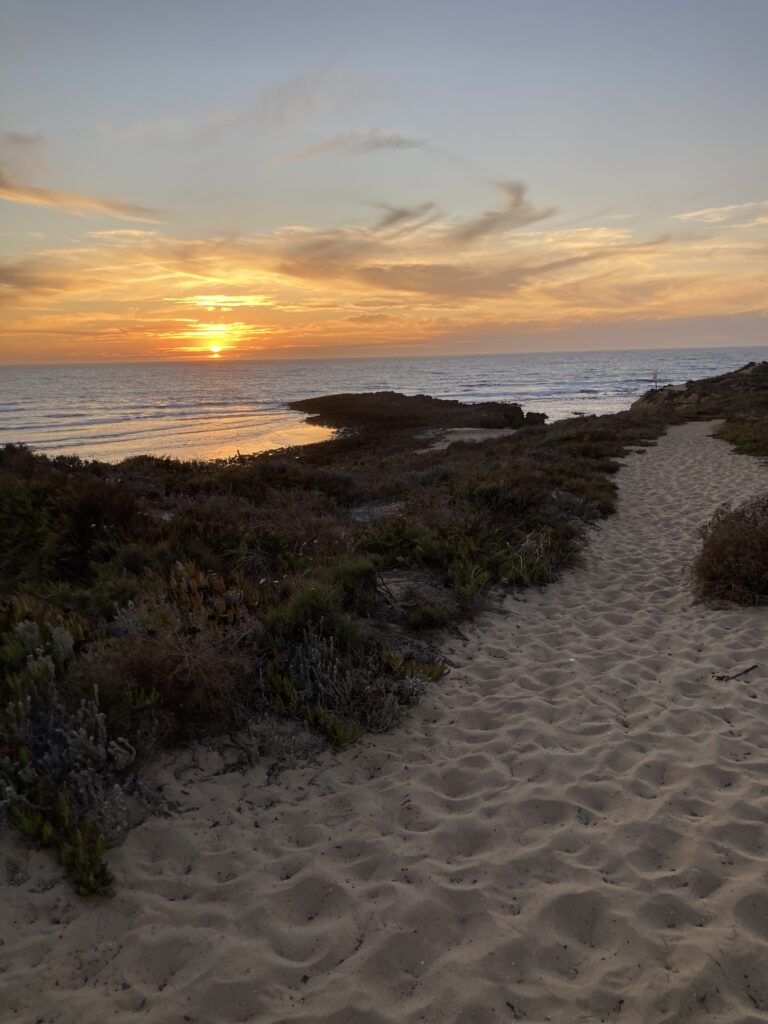
After crossing the Mira River by ferry, one of the most iconic sections of the Fishermen’s Trail begins. You’ll walk among dunes, sandy paths, and cliffs with endless views of the Atlantic. Almograve is a small, peaceful, and authentic coastal village, ideal for relaxing and enjoying a simple dinner after a short but intense day.
Day 3: Almograve – Zambujeira do Mar (22 km)
This day combines wild nature and rural landscapes. You’ll pass by secluded beaches, open fields, and steep cliffs where it’s common to see storks nesting. Zambujeira do Mar is one of the liveliest towns on the route, with a beautiful urban beach and excellent food, especially fresh fish and seafood.
Day 4: Zambujeira do Mar – Odeceixe (18 km)
One of the most spectacular stages of the route. The trail passes by beaches like Carvalhal and the impressive cliffs of Azenha do Mar, one of the most photographed spots on the coast. The arrival in Odeceixe is magical: its beach, divided between the river and the sea, creates a unique landscape. It’s an ideal place to swim or simply relax in a privileged natural setting.
Day 5: Odeceixe – Aljezur (19 km)
Here you temporarily leave the coast to embark on the Historical Way. The landscape changes to rolling hills, country lanes, and eucalyptus forests. Aljezur is notable for its Moorish heritage and its Moorish castle, from which you can enjoy panoramic views of the valley. This is a quieter, more cultural stage.
Day 6: Aljezur – Arrifana (17 km)
The path heads back towards the ocean, and the views begin to open up again. Arriving in Arrifana is exciting, with its enormous crescent-shaped beach and vibrant surf culture. It’s a perfect place to relax, watch the sunset from the cliffs, or enjoy a beer overlooking the sea.
Day 7: Arrifana – Carrapateira (20 km)
A challenging but very rewarding stage. You’ll walk along elevated coastal paths, hidden beaches, and completely unspoiled areas. Carrapateira is small, authentic, and very peaceful. It stands out for its local cuisine and for being surrounded by pristine nature.
Day 8: Carrapateira – Vila do Bispo (22 km)
This section crosses more arid and open landscapes, where the wind is often a dominant feature. A sense of vastness accompanies much of the day. Vila do Bispo is a village with a rich history and well-preserved traditions. Be sure to try the barnacles, one of the region’s most typical delicacies.
Day 9: Vila do Bispo – Sagres (14 km)
A shorter stage that allows you to enjoy the surroundings at a leisurely pace. The path leads to one of the most iconic points of the trip: Cape St. Vincent, considered for centuries to be the “end of the world”. Sagres combines history, with its fortress, and a young, surfer vibe, ideal for relaxing.
Day 10: Sagres – Salema (20 km)
From Sagres, the trail continues along the coast with open views of the Atlantic. The landscape is less rugged, but just as beautiful. Salema is a charming fishing village, perfect for relaxing, enjoying the beach, and savoring freshly caught fis
Day 11: Salema – Luz (18 km)
A pleasant stage with tranquil beaches, rock formations, and gentler cliffs. Luz offers a relaxed atmosphere, ideal for strolling along the promenade, enjoying a coffee by the sea, and recharging before your final day.
Day 12: Luz – Lagos (13 km)
The final leg takes you along the coast to Lagos, a vibrant city with history, beaches, and a lively nightlife. You’ll celebrate your achievement in style!
How to do the Vicentina Route in 10 days or less
Although the classic Vicentina Route itinerary is usually completed in 12 days, it’s perfectly possible to finish it in 10 days or even less with good planning. This option is ideal for those with limited vacation time who don’t want to miss out on the essence of the trail: wild landscapes, the Atlantic coast, and charming villages.
One of the most common ways to shorten the route is to combine longer stages or eliminate sections of the Historical Way and focus primarily on the Fishermen’s Trail, which is the most spectacular and coastal route. For example, stages like Zambujeira do Mar – Odeceixe – Aljezur can be combined into a single long day, or Arrifana – Carrapateira without stopping in intermediate towns, provided you are in good physical condition.
Using local transport or luggage transfers also makes it easier to complete the route in fewer days. Many companies offer transfers between stages or backpack transport, allowing you to walk more kilometers each day without the physical strain of carrying weight. This is especially useful on long, sandy sections, where the effort is multiplied.
For those seeking an even faster version, it’s possible to hike the Vicentina Route in 8 or 9 days, but this option is recommended only for experienced hikers. It requires days of more than 25 km, early starts, and careful planning of accommodations, water, and food. In this case, the priority shifts from rest to continuous hiking.
Practical tips for the Vicentine Route
- Logistics and transport
- Always carry an up-to-date map of the Vicentina Route or downloaded GPS tracks.
- Apps like AllTrails, Komoot, or Wikiloc are very useful for following the route and viewing elevation changes, distance, and estimated time.
- Download maps for offline use, as there is no cell service in many sections.
- The signage is generally good, but it can be confusing in dune areas or on rural roads.
- Plan the start and end points of each stage in advance, as well as transportation options between towns.
- Accommodation
- Book in advance, especially between April and June and from September to October, when the route is most popular.
- The options include hostels, guesthouses, rural guesthouses, and small hotels, with choices for all budgets.
- Some villages have limited accommodation, so it’s advisable to secure lodging before starting each stage.
- Opa Hostel (Vila Nova de Milfontes) is an excellent starting point or stopover thanks to its friendly atmosphere, convenient location, and patio for relaxing.
- What to bring
- Prioritize well-fitting hiking boots or shoes, preferably broken in before your trip.
- A lightweight backpack (30–40 L) is sufficient if you’re not carrying a tent.
- Breathable technical clothing, a windbreaker, a hat, and sunscreen are essential.
- Trekking poles are very helpful on sandy sections and long descents.
- Don’t forget a small first-aid kit, sunscreen, and a headlamp.
- Water and food
- Carry at least 1.5–2 liters of water per stage, more on hot days or longer stages.
- Some sections pass through areas without services for several hours.
- Energy snacks such as nuts, bars, or dried fruit are very useful.
- Take advantage of towns to buy food at local supermarkets or bakeries.
- Restaurants usually offer simple menus, featuring fresh fish and seafood.
- Season
- Spring (March–June) and autumn (September–November) are the best times to visit due to mild temperatures and fewer tourists.
- In summer, the heat can be intense, and some sections become very challenging; it’s recommended to start early.
- In winter, although the weather is mild, there can be strong winds, rain, and some accommodations may be closed.
- Always check the weather forecast, especially regarding the Atlantic winds, which can affect your walking pace.
Let’s Walk!
The Vicentina Route is more than just a path; it’s an experience that connects you with the nature, culture, and people of Portugal. Over these 12 days, you’ll discover unforgettable landscapes, savor delicious food, and create memories that will last a lifetime. Pack your backpack and embark on this coastal adventure!
