

Hello adventurous cyclists! If you’re thinking of touring Portugal from north to south, the bike route from Lisbon to Faro is a unique experience you won’t want to miss. This route combines beautiful beaches, charming villages, and diverse landscapes, all while pedaling to the rhythm of your own wheels. In this article, we’ll give you all the details you need to plan your trip, including routes, points of interest, and accommodation options. Get your bike ready, and let’s get started!
- Lisbon – Faro bike route: Enjoy the Alentejo and Algarve
- Table of stages Lisbon to Faro by bicycle
- Map Lisbon – Faro bike route: 7-day itinerary
- Day 2: Setúbal – Vila Nova de Milfontes (80 km)
- Day 3: Vila Nova de Milfontes – Zambujeira do Mar (50 km)
- Day 4: Zambujeira do Mar – Aljezur (65 km)
- Day 5: Aljezur – Sagres (50 km)
- Day 6: Sagres – Lagos (35 km)
- Day 7: Lagos – Faro (80 km)
- Tips for cycling the Lisbon–Faro route
- An unforgettable cycling route along the Portuguese coast
- Frequently Asked Questions (FAQs) about cycling from Lisbon to Faro
Lisbon – Faro bike route: Enjoy the Alentejo and Algarve
The journey from Lisbon to Faro covers approximately 300 to 350 km, depending on the routes you choose. A popular option is to follow the coastline along the Ruta Vicentina, which combines coastal paths and secondary roads. Another alternative is to take more direct routes inland, but if you have the time, the coastal route offers scenery worth every pedal stroke.
Table of stages Lisbon to Faro by bicycle
| Day | Stage | Distance | Elevation gain approx | Type of terrain | Recommended bike | Level |
| 1 | Lisbon – Setúbal | 50 Km | + 400 m | Asphalt + bike paths | Trekking / Gravel | Easy |
| 2 | Setúbal – Vila Nova de Milfontes | 80 km | + 500 m | Asphalt + gravel roads | Gravel / light MTB | Medium |
| 3 | Vila Nova de Milfontes – Zambujeira do Mar | 50 km | + 600 m | Coastal roads + gravel | Gravel / MTB | Medium |
| 4 | Zambujeira do Mar – Aljezur | 65 km | + 700 m | Mixed (asphalt and dirt) | Gravel / MTB | Medium |
| 5 | Aljezur – Sagres | 50 km | + 650 m | Secondary asphalt | Gravel / Trekking | Medium |
| 6 | Sagres – Lagos | 35 km | + 300 m | Asphalt | Any type | Easy |
| 7 | Lagos – Faro | 80 km | + 400 m | Asphalt + bike paths | Trekking | Medium |
Map Lisbon – Faro bike route: 7-day itinerary
Day 1: Lisbon to Setúbal (50 km)
The adventure begins in Lisbon, one of Europe’s most vibrant capital cities, and it does so in a very special way: crossing the majestic Tagus River by ferry from Cais do Sodré to Cacilhas. This short crossing not only saves you kilometers in the city but also offers spectacular views of the Lisbon skyline, perfect for starting the trip in good spirits.
Once in Cacilhas, the route continues along secondary roads and quiet stretches that gradually take you away from the hustle and bustle of the city. The terrain is mostly flat at the beginning, ideal for warming up your legs, although as you approach Setúbal the landscape becomes greener and more rolling. The final stretch offers some of the best views of the day, with the Arrábida Natural Park as a backdrop and the Atlantic Ocean accompanying you at various points along the way.
Reaching Setúbal is a reward in itself. This port city combines local atmosphere, maritime tradition, and excellent cuisine, making it a perfect place to relax after the first day on the bike.
Points of Interest
– Arrábida Natural Park: A protected natural area of great beauty, with limestone cliffs, turquoise coves, and spectacular viewpoints. Although some climbs can be challenging, it’s worth stopping to enjoy the scenery and take photos.
– Livramento Market: Considered one of the best markets in Portugal, it’s the ideal place to refuel. Its stalls of fresh fish and seafood, along with the traditional tiles that decorate the interior, offer an authentic and very local experience.
Setúbal offers several accommodation options tailored to cyclists and travelers passing through. One of the most highly recommended is Hola Setúbal – Pousada de Juventude, which offers affordable prices, a relaxed atmosphere, and a convenient location. The city also has small hostels and family-run guesthouses where you can safely store your bike and enjoy a well-deserved rest before continuing your journey south.
Day 2: Setúbal – Vila Nova de Milfontes (80 km)
The second day of the Lisbon–Faro cycling tour is one of the most spectacular and photogenic of the entire route. The day begins in Setúbal, taking the ferry to the Tróia Peninsula, one of the best ways to start a coastal stage in Portugal without traffic and with privileged views of the Sado estuary.
From Tróia, the cycling route runs parallel to the Atlantic Ocean, crossing the Tróia Peninsula and Comporta, an area known for its pristine beaches, white sand dunes, and extensive rice paddies. This section is ideal for those seeking a peaceful cycling experience in Portugal, with quiet roads and a landscape that invites you to ride at a leisurely pace. The terrain is mostly flat, making it easy to complete the 80 km without major technical difficulties, although the distance requires careful planning.
As you venture deeper into the coastal Alentejo region, the surroundings become increasingly natural and wild. The day culminates in Vila Nova de Milfontes, one of the most emblematic towns on the Vicentina Route by bicycle, where the Mira River meets the sea. This destination is very popular with cyclists for its relaxed atmosphere, beaches, and excellent cuisine featuring fresh fish and seafood.
Points of Interest
– Comporta Beach: Considered one of the best beaches on the Portuguese coast, it’s perfect for a break during the route. Its expansive sandy shores, the sound of the Atlantic, and the tranquility of the surroundings make it an ideal place to rest, hydrate, and enjoy the scenery.
– Vila Nova de Milfontes: A charming coastal town, famous for its river and sea beaches. It’s a key point on the Vicentina Route and an excellent place for an evening stroll, a delicious dinner, and to recharge before the next cycling stage.
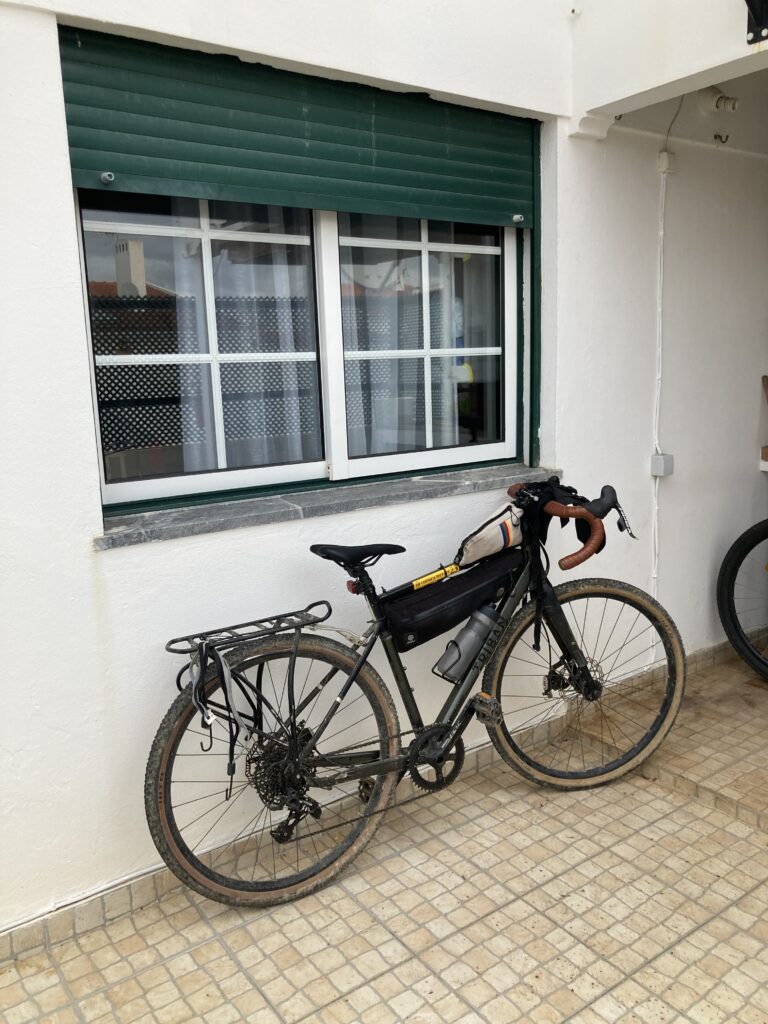
For overnight accommodation, Opa Hostel is a highly recommended option among travelers and cyclists because you can keep safely your bike in the patio. It stands out for its welcoming atmosphere, affordable prices, and central location that allows for easy walking around Vila Nova de Milfontes. Furthermore, it is generally well-suited to the needs of those exploring Portugal by bicycle.
Day 3: Vila Nova de Milfontes – Zambujeira do Mar (50 km)
The third stage of the trip is one of the most special for lovers of cycle touring in Portugal and unspoiled natural landscapes. From Vila Nova de Milfontes, the route plunges into the famous Fishermen’s Trail, one of the most emblematic sections of the Vicentina Route, known for its stunning cliffs, coastal paths, and hidden beaches.
This day combines sections of hard-packed dirt tracks with quiet secondary roads, making it a very enjoyable stage for those seeking an adventure cycling experience by the sea. Although the distance is shorter (50 km), the terrain is somewhat more demanding due to the constant ups and downs, so it’s best to take it easy and enjoy the surroundings.
Throughout the route, the Atlantic Ocean will be your constant companion, with open sea views, spectacular rock formations, and the sound of waves crashing against the cliffs. It’s an ideal stage to stop frequently, take photos, and connect with nature.
The arrival in Zambujeira do Mar marks the end of an intense but unforgettable day. This small coastal town, beloved by surfers and travelers, stands out for its authenticity, its tranquil atmosphere, and its incredible sunsets over the Atlantic.
Points of Interest
– Almograve Beach: One of the most beautiful beaches on the Alentejo coast. Its natural setting, surrounded by dunes and rock formations, makes it a perfect place to take a break, refresh yourself, and enjoy the scenery before continuing your journey.
– Zambujeira do Mar: A true gem of the Portuguese coast. Its ocean viewpoints, urban beach, and restaurants specializing in fresh fish make this town an ideal place to end the day and relax after a ride.
Zambujeira do Mar offers several options for rural accommodation and hostels, ideal for cyclists. country houses are perfect if you’re looking for peace and quiet and a connection with nature, while local hostels offer affordable prices and a friendly atmosphere. Many of them allow you to store your bike securely and receive recommendations for the next stage of your route.
Day 4: Zambujeira do Mar – Aljezur (65 km)
The fourth day of the Lisbon–Faro cycling route continues to offer some of the most breathtaking scenery on the Vicentina Route, solidifying its place as a favorite among cycle tourists in Portugal. From Zambujeira do Mar, the route heads south along quiet paths and secondary roads that wind between cliffs, verdant fields, and hidden coves.
Along the way, you’ll pass iconic beaches like Carvalhal, where the Atlantic Ocean crashes powerfully against the coast, creating a wild and photogenic setting. The terrain combines rolling hills with short climbs that will test your legs, though they aren’t overly technical. This stage invites you to ride at a leisurely pace, enjoying the natural surroundings and making frequent stops.
The highlight of the day is arriving in Odeceixe, a very special enclave that marks the transition between the Alentejo and the Algarve. From here, the route veers inland, following the course of the Seixe River, momentarily moving away from the sea and into a more rural and tranquil landscape. This final stretch leads to Aljezur, a town with a strong personality, closely linked to surf culture and alternative tourism.
Aljezur stands out for its relaxed atmosphere, its international community, and its proximity to some of the best beaches in the western Algarve, making it an excellent rest stop before continuing the route south.
Points of Interest
– Odeceixe Beach: Considered one of the most beautiful and photographed beaches in Portugal, it’s famous for its unique shape, with the Seixe River on one side and the Atlantic Ocean on the other. It’s a perfect place to take a break, go for a swim, or simply enjoy the views before tackling the final stretch.
– Aljezur Castle: Located atop a hill, this castle of Moorish origin is one of the main cultural attractions in the area. From its walls, you can enjoy panoramic views of the valley, the town, and the surrounding area, especially spectacular at sunset.
Aljezur offers a good variety of hostels, guesthouses, and campsites, very popular with cyclists, surfers, and backpackers. The hostels in the town center are ideal if you’re looking for comfort and a social atmosphere, while the campsites and rural accommodations in the surrounding area are perfect for those who prefer a more direct connection with nature. Many of them offer bike storage and a comfortable place to rest before the next stage.
Day 5: Aljezur – Sagres (50 km)
The fifth stage of the Lisbon–Faro biking route is, for many cyclists, one of the most exciting and symbolic of the entire journey. From Aljezur, the route continues south through the Southwest Alentejo and Vicentine Coast Natural Park, a protected area known for its wild landscapes, dramatic cliffs, and strong connection to the Atlantic Ocean.
This 50 km stretch combines secondary roads and nature trails with little traffic, making it an ideal stage for enjoying cycling in the heart of nature in Portugal. Although the distance is relatively short, the terrain is somewhat undulating, and the wind can play a significant role, especially as you approach the more exposed coast. Even so, the effort is constantly rewarded by the open sea views and the feeling of riding one of the most authentic stretches of the country.
Arriving in Sagres has special significance: this point is considered the southwesternmost point of continental Europe and for centuries was seen as the “end of the world.” Today, Sagres is a vibrant place, very popular with surfers and travelers, combining history, nature, and a relaxed atmosphere perfect for unwinding after several days on the road.
Points of Interest
– Cape St. Vincent: One of the most impressive places in Portugal. Its enormous cliffs, the powerful crashing of the ocean, and its historic lighthouse create a spectacular landscape, especially at sunset. It’s a must-see for any cyclist exploring this area.
– Sagres Fortress: An enclave steeped in history, linked to the Age of Discovery and Prince Henry the Navigator. From its walls, you can enjoy panoramic views of the Atlantic and the coast, making it a must-see.
Sagres offers a wide range of hostels, hostels, and guesthouses, well-suited to travelers on the road, known for their welcoming atmosphere, affordable prices, and convenient location. Many accommodations in Sagres are also accustomed to welcoming cyclists and offer facilities for storing bicycles and sharing experiences with other travelers.

Day 6: Sagres – Lagos (35 km)
The sixth stage of the trip is shorter, but no less spectacular. From Sagres, the route heads east along the coast of the western Algarve, one of the most popular areas for cycling in Portugal thanks to its climate, coastal scenery, and excellent tourist infrastructure.
At just 35 km, this day is ideal for a leisurely ride and enjoying the surroundings. The route combines quiet secondary roads with stretches close to the sea, offering constant views of the Atlantic. It’s a perfect stage to recover after the previous days, allowing for frequent stops and time to explore some of the Algarve’s most iconic spots.
As you approach Lagos, the landscape transforms: golden cliffs, hidden coves, and famous sea caves herald your arrival at one of the most vibrant destinations in southern Portugal. Lagos combines history, spectacular beaches, and a lively urban life, making it an essential stop for cyclists.
Points of Interest
– Ponta da Piedade: Undoubtedly one of the most impressive spots in the Algarve. Its rock formations sculpted by the sea, natural arches, and turquoise waters make it a must-see. It’s recommended to leave your bike and explore the area on foot to fully appreciate the viewpoints.
Lagos Old Town: A charming old town with cobbled streets, historic walls, local shops, and a wide variety of bars and restaurants. It’s the perfect place to stroll at the end of the day, enjoy a delicious dinner, and soak up the local atmosphere.
Lagos offers a wide variety of hostels, guesthouses, and budget accommodations, ideal for travelers and cyclists, known for their social atmosphere, central location, and good value. Many hostels in Lagos are also accustomed to welcoming cyclists and offer secure bike storage.
Day 7: Lagos – Faro (80 km)
The seventh and final stage of the Lisbon–Faro by bike route puts the finishing touch on an unforgettable adventure along the Portuguese coast. From Lagos, the route continues east through the heart of the Algarve, a region famous for its mild climate, coastal towns, and expansive beaches. Although it’s one of the longer days, the 80 km are mostly flat, making it easy to maintain a steady pace.
During the journey, the route combines secondary roads and well-maintained cycle paths, passing near towns like Portimão, Albufeira, and Quarteira, where you can stop to rest, hydrate, or enjoy the local cuisine. This final stage is ideal for reflecting on the trip and savoring the last few kilometers of one of the best cycling routes in Portugal.
The arrival in Faro marks the official end of the route. The capital of the Algarve, this city offers a relaxed atmosphere, an interesting historical heritage, and an excellent seaside location, perfect for celebrating your achievement with dinner overlooking the ocean or a drink at sunset.
Points of Interest
– Ria Formosa Natural Park: One of the most important natural areas in southern Portugal. This system of lagoons, islands, and marshes is a true paradise for nature lovers and birdwatchers. Cycling through it is a peaceful and very different experience from the previous stages, ideal for ending your trip in peace.
– Faro’s Old Town: Known as the Cidade Velha, it’s the perfect place for a leisurely stroll. Its cobbled streets, historic walls, tranquil squares, and small restaurants invite you to relax and celebrate the end of your cycling adventure.
Faro offers a wide range of hotels, hostels, and city accommodations to suit all budgets, with comfortable options for resting after the final stage and easily exploring the city on foot. Many hotels in Faro are also accustomed to welcoming cyclists and offer convenient services for short stays.
Tips for cycling the Lisbon–Faro route
- Plan your water and food supplies carefully: There are long stretches without services, especially along the Vicentina coast. Always carry enough water.
- Mixed terrain is common on the Vicentina Route, especially between days 2 and 4.
- A gravel bike is the most versatile option for the entire route.
- Wind can increase the actual difficulty, particularly between Aljezur, Sagres, and Lagos.
- Start early: This will allow you to avoid the heat, enjoy better wind conditions, and make more photo stops.
- Check the wind: In the Algarve and Sagres, it can be strong. Adjust your pace and don’t underestimate its impact.
- Use GPS or offline maps: Some areas have poor signal. Apps like Komoot or Maps.me are very useful.
- Sun protection is mandatory: Even in spring or autumn, the sun in Portugal can be strong.
- Respect natural areas: A large part of the route crosses protected natural parks. Stay on designated paths and take care of the environment.
An unforgettable cycling route along the Portuguese coast
Cycling Portugal from Lisbon to Faro is much more than a trip: it’s an experience that combines unspoiled nature, charming villages, spectacular beaches, and exceptional cuisine. Over seven days, this cycling route takes you from the urban pace of Lisbon to the tranquility of the Algarve, passing through some of the most breathtaking coastal landscapes in Europe.
The Vicentina Route, the western Algarve, and the Ria Formosa make this itinerary a perfect option for both experienced cyclists and travelers seeking an adventure that balances effort and enjoyment. With well-distributed stages, accessible accommodations, and ideal weather for much of the year, cycling from Lisbon to Faro is establishing itself as one of the best cycling routes in Portugal.
Upon arriving in Faro, you will not only have crossed the country from north to south along the coast, but you will also take away unforgettable memories, miles of smiles, and the satisfaction of having completed one of the most beautiful routes in southern Europe.